Plate 01
Rotated into place. Logged as it goes.
The drawing is original to this preview. The rendering and the layer diagram are from the owner's existing site, and they are labeled as diagrams rather than as a boring or a shop drawing.

What the crew records
01 Look at the structure and the soil. The existing site offers a no-charge visit, Monday through Saturday, to see settlement or a crawl space and talk about cause. A visit is not a geotechnical report and it is not a design. This preview cannot book the visit. Use the published phone or email.
02 An engineer sets the layout. The existing site says the practice provides a written layout with installation notes, torque targets, and a fixed-price proposal. The engineer of record is not named on the public pages. Torque targets belong to that design. They are not printed here.
03 Rotate, record, connect. A hydraulic drive head rotates each pier. Torque is written down. The pier is then bracketed or capped as designed. The existing site says a completion set and an engineer's sign-off follow. Sign-off still depends on the engineer, who is not identified on the source pages.
Torque is a field measurement taken while the shaft turns. An engineer may correlate it to capacity for a known shaft, helix, and soil. Without that correlation, the number is still worth keeping. It is not the design.
Sample record sheets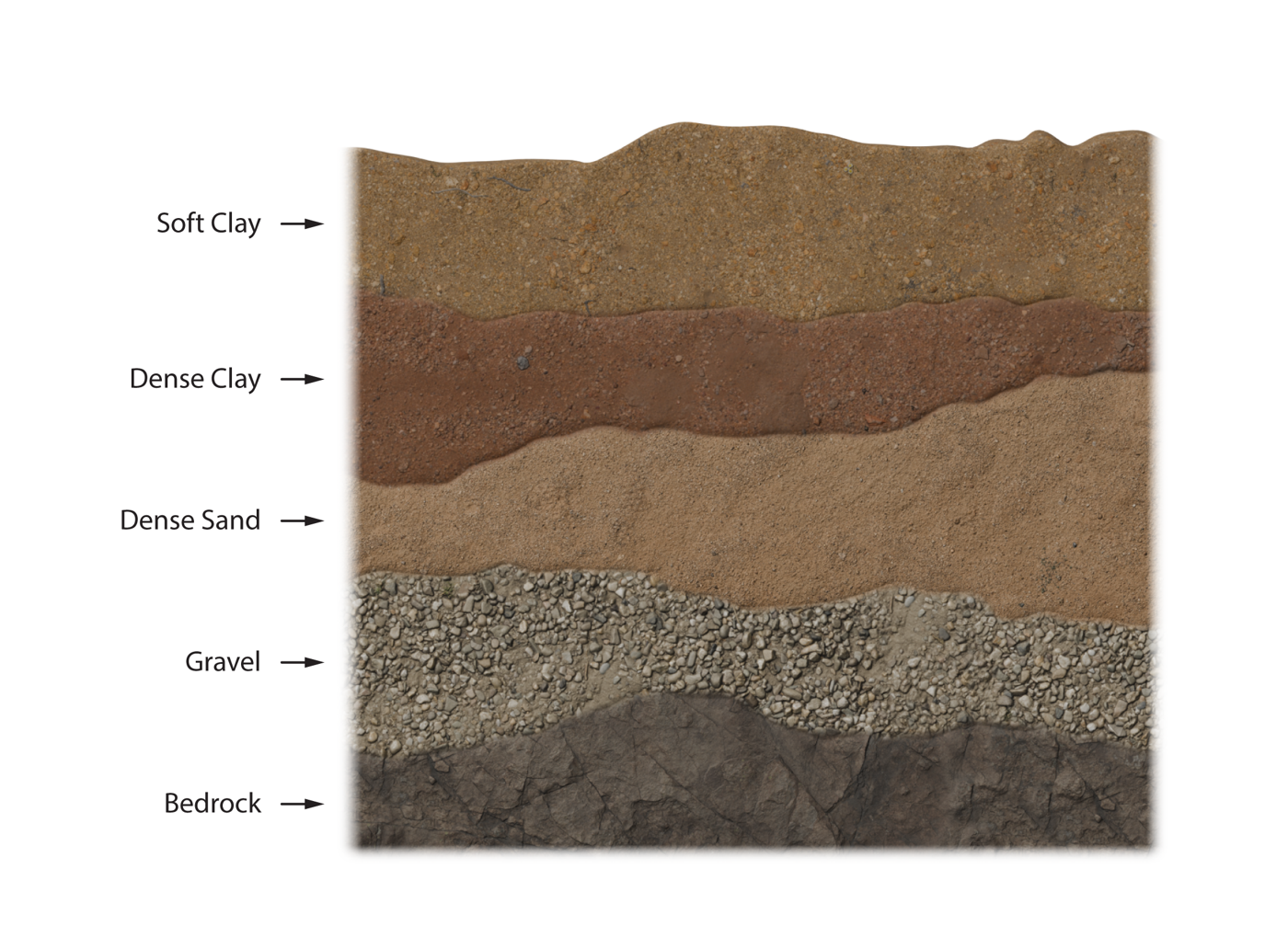
Layers are not a formula
General layer diagram from the existing site. It shows no pier and it is not a boring. Coastal sites often differ.
Coastal counties in the published area often include loose sand, organic silt, and a high water table. Bedrock is not the usual target. The engineer decides what “competent” means for the load on that pier.